How is your sleep? I mean, your night-time sleep (not naps during the day because you’re exhausted). People with EDS and the common comorbids have the same issues that normies can have, true, but there are several characteristic problems that chronic illness folks experience when it comes to slumber. My guess is that your answer to the question about your sleep, then, is: “It’s complicated.” But knowledge is power, so keep reading to learn about what Chinese medicine can do for you and your experience in dreamland.
There are a number of issues that impede slumber when we live with chronic conditions like HSD/hEDS, MCAS, and the like. Sleep is often of shorter duration and not restorative. Dysautonomia can get in the way of sleep progression and impede REM sleep. MCAS can make anxiety worse and GERD can make it hard to lie down and stay there. The high, arched palate so common to EDS can lead to upper airway resistance syndrome (UARS), which is when the airway collapses just enough to make sleeping unpleasant. It’s a bit worse than snoring and somewhat less severe than obstructive sleep apnea (OSA) but it’s just one more factor in the sleep problems roster for people with EDS.
*****
*****
And don’t get me rolling on the subject of painsomnia.
One thing is to have a high pain tolerance. People with EDS wouldn’t survive their condition(s) if they were wimpy about pain. But at night when you’re exhausted and just want to get some sleep, it’s harder to ignore pain. And what about collapsing shoulders or a neck that just won’t get comfortable no matter what pillow you choose?
Chinese medicine can help you to change things though.
If you go to an EDS-aware practitioner (you are going to go to an EDS-aware practitioner, right?), they will probably ask you about your pillow collection and how you sleep. Are you on your side in a mountain-climber position with dinosaur arms, for instance? Sleeping with T-Rex arms may feel good in the moment but it can cause nerve inflammation in hands and wrists. And if your shoulders collapse when you’re on your side, it may be time to try to shift your position and find ways to prop yourself for stability. You and your practitioner will discuss how you set yourself up for sleep with the right pillows for your needs so that the damage is minimal. Easier said than done, but this is important.
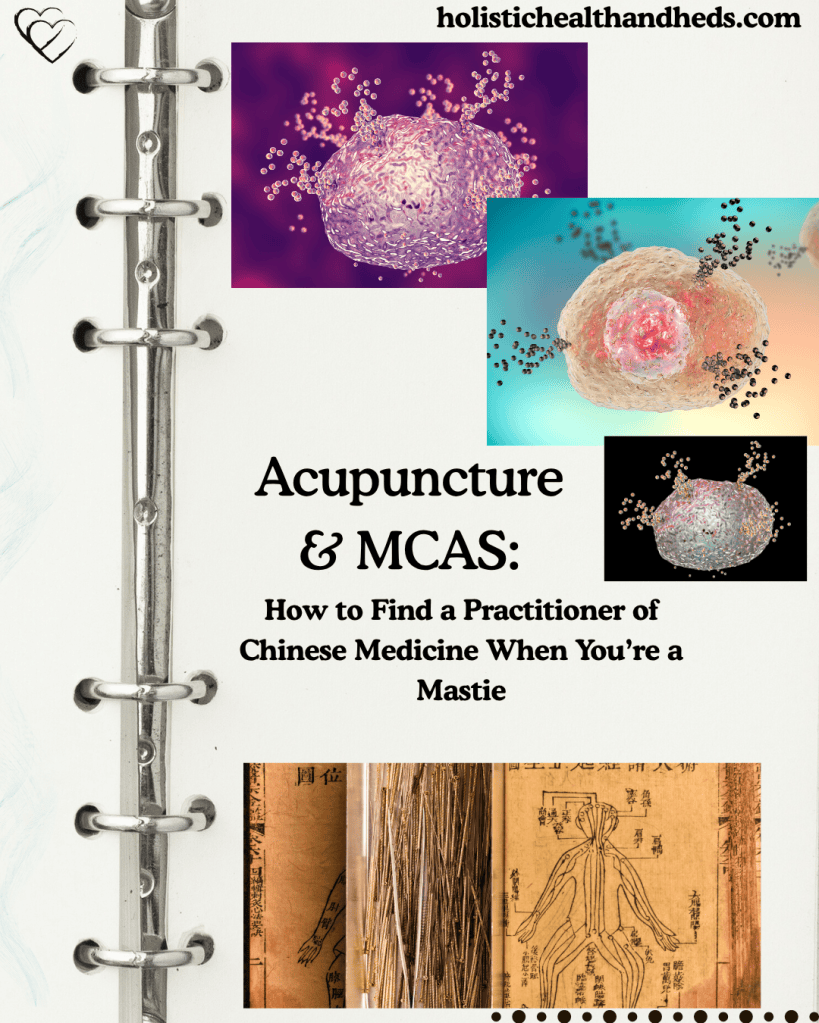
“My first blog post about finding an acupuncturist was in 2019, so it’s been a while. Besides, the original essay […] was for normies and I think we can all agree that there needs to be a version of this essay for people with complex conditions. Whether it’s EDS, MCAS, POTS, autoimmune disease, or issues like C-PTSD, it really does matter that you understand what you are looking for and how to search.”
—Acupuncture & EDS: How to Find a Practitioner of Chinese Medicine When You’re a Zebra
*****
If you have pain issues related to sleep position, your practitioner can give you topical herbs to reduce discomfort (ideally, having you smell them and do a spot-check before purchasing so you know that you won’t react badly, especially if you have MCAS). We can give acupuncture treatments and, in my opinion best of all, we can give you a gentle tui na treatment to ease the havoc wrought by inflamed nerves and loose connections.
People who read my blogs know that tui na is already know that this form of Chinese medical massage can work magic for a number of conditions, including chronic pain. It is a fantastic modality for people with chronic conditions:
“If you’ve never heard of it, or you’ve never heard the word spoken out loud, it is pronounced “twee nah,” which means “push” and “grasp,” respectively. It is somewhat like massage and it’s also akin to acupressure and channel work (as opposed to acupuncture directed to specific points). Tui na is one of the pillars of Chinese medicine (the others being: acupuncture, herbal medicine, nutrition, and the breath/movement practice known as qigong) and it is a medical specialty. If you are a practitioner in China, you can specialize and treat the same patients as a rheumatologist or an orthopedic doctor would.”
–“’Ehlers-Danlos Syndrome, Tui Na, and You’ Revisited (Some Thoughts on the OG Blog Post)“
What about your gut health?
When a person lives with chronic issues like MCAS it can be challenging to sustain a health gut microbiome. People with HSD/hEDS who tend towards weak digestion for other reasons may also find that their microbiome is part of why their sleep isn’t easy. Gastroparesis is another gut-buster that can manifest in sleep problems.
Chinese medicine has a lot to say about digestion and gut health, though. Depending on your presentation, your practitioner might write you an herbal prescription and give you either acupuncture or tui na on your abdomen. We may opt for nutrition education and some suggestions for eating according to the needs of your specific situation. You might need to revise your eating schedule so that you eat less closer to bedtime and avoid things that antagonize your GERD.
When your gut is healthier, the rest of you can follow. Good sleep might be part of that bigger picture created by a stronger microbiome, so don’t ignore it. Most acupuncturists most certainly will not.
Another thing you might discuss with your practitioner is your dreaming. Do you dream?
If so, are they pleasant dreams or do you struggle with nightmares? Chinese medicine has a long, long tradition of dream interpretation and we consider the relationship of dreams to internal organs.
“In Chinese medicine, we will initially consider the Heart (capitalized to indicate the Chinese umbrella category that encompasses both organ and its associations) and the shen, which is somewhat akin to the spirit, or your inner spark. Depending on your dreams, we might address imbalances in other organs or systems. A person who has frightening nightmares might need support in their Kidneys, and one who grieves might find relief when treated for Lung health. It all depends on the dreams and how they fit into your larger picture. Someone who worries and has chronic stress that expresses in dreams may find their acupuncturist resolving their issues by addressing the Spleen and its pair, the Stomach.”
—Chinese Medicine, Sleep, and Dreams (Healing Journeys Through Dreamland)
One thing to keep in mind too is that nightmares and overly-vivid dreams aren’t only pertinent to trauma. Extreme nightmares, sleepwalking, and other similar can be very early warning signs of neurological issues to come. Not always, but they can be a sign to protect your gut health and sooth your sleep, especially if there is a family history of Parkinson’s or Alzheimer’s disease.
“Brain health is a long-term project. The ancient physicians in Chinese medicine described dementia and categorized it as “phlegm misting the mind.” Biomedicine today will refer to tau plaques on the brain and neurofibrillary tangles within the nerve cells. Western medicine calls it Parkinson’s disease; Chinese will speak of Wind and both recognize that excessive or vigorous dreaming can be a sign of problems to come in this realm. A person who has Alzheimer’s or Parkinson’s in the family, or one who sleepwalks or who has nightmares or sleep paralysis, would be very smart to work with a gut health coach now so that they protect their brain for later.”
—Health Coach for Gut Health? Yes, and Here’s Why
It really is fascinating how much gut health can affect so many different aspects of your wellbeing, isn’t it.? In my practice, and once we delve into issues related to pain and sleep positions, we definitely allot time to gut health. For some people, it really is the key that will unlock all the doors. For others, it might not be quite so dramatic. Either way, getting a handle on your gut health and your microbiome is a worthy project indeed.
*****
*****
Strategizing is so important.
Another thing I discuss with my patients is toasted skin syndrome (erythema ab igne). This is when you spend too much time with your heating pad and end up with what looks like either a rash or especially angry livido reticularis (they’re not the same thing but they can look similar). You do not want to permanently discolor your skin, so I may prescribe a Chinese herbal formula to warm the limbs plus suggest good things like congee to make the insides toasty.
“Congee is encouragement in a bowl. Nowadays, it’s usually rice cooked with lots of liquid and at length until it becomes like a delicious porridge, but originally Chinese people used any grains available to them. Its history is extensive, with archeological records showing its roots going back thousands of years. Congee is a common breakfast item for Asian cultures, and it’s also something that one eats when one is sick. It’s warming, healing, and gentle on your digestive system. As such, congee holds a special place as staple for home self-care.”
—Congee For Zebras (Like Chicken Soup for the Ehlers-Danlos Warrior Soul, but Better)
Figuring out ways to keep you warmer without the heating pad can make sleep a bit easier, and if you also have improved gut health, herbs or acupuncture or tui na to minimize pain, and a good plan for how you set up your pillows, you are halfway there.
What about sleep patterns, though?
Some people are early birds and others are night owls. Have you ever heard of the sleep chronotypes? There is the simple template I just mentioned (early birds and night owls). Another one uses four animals as models. A bear wakes with the sun and has a mid-afternoon energy dip. Lions rise before the sun and go to bed early, with high energy in the morning and a slow decline throughout the day. A wolf is one who stays up late and gets up even later, with highest energy later in the evening. The last one, a dolphin, may best describe people with chronic conditions: they’re light, irregular sleepers with varied energy levels.
In Chinese medicine, we have something similar to what Western thought refers to as circadian rhythm. We frame our perspective as the Chinese organ clock and connect time frames to organs. At 3:00 a.m., Western medicine will speak of your liver dumping glucose into your system to keep your blood sugar steady; Chinese medicine, in our corner, will say that the hours between 1:00 and 3:00 a.m. are the period related to the liver and if you bolt awake at that time, we address discrepancies with the body clock in mind.
There usually is more than one reason why a person with EDS would have problems with their sleep, especially if MCAS or dysautonomia are added to the mix. But just as each one of us is unique and presents in our own way, there still are some common narratives that we all share. Chinese medicine is great for pain relief, and though I haven’t mentioned magnet therapy, it can be an option. So can a gentle movement routine that gets your body relaxed and ready for bed. Good sleep hygiene is a must, and being attentive to your chronotype can help you and your practitioner set up a sleep program for you.
There are options. You can improve the quality of your sleep and the way your night-time hours affect your daily life.
Are you ready to try Chinese medicine?
*****
*****

Dr. Paula Bruno, Ph.D., L.Ac., is a licensed acupuncturist and herbalist, an AOBTA-CP traditional Chinese bodywork therapist, an author, and a health coach. She maintains an active and growing practice at Two Hearts Wellness, her Austin, TX office. Dr. Bruno is also available for distance appointments for wellness consultation or coaching.
In her first career, she was a Spanish professor.
Dr. Bruno’s specialties as a Chinese medicine practitioner include: • Musculoskeletal health (acute or chronic pain relief; Ehlers Danlos syndrome & hypermobility support) • Digestive support, gut health, and weight loss • Aesthetic treatment, including scar revision • Men’s health • General preventative care and wellness support for all persons.
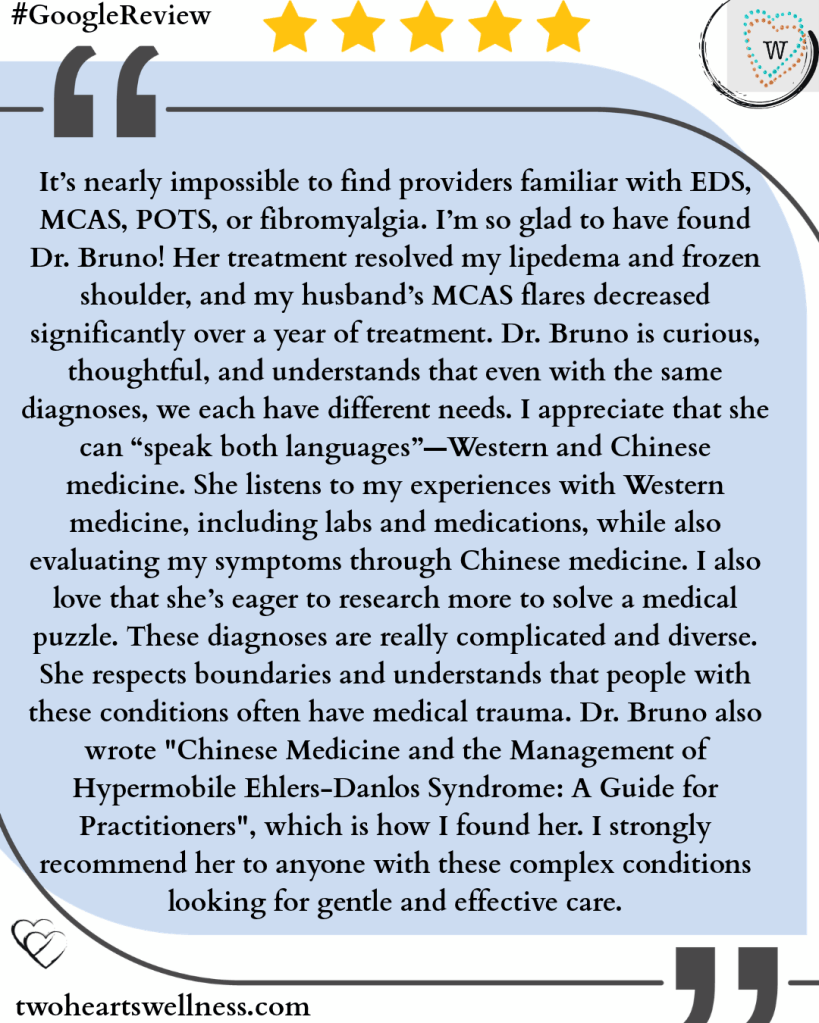
She is the author of Chinese Medicine and the Management of Hypermobile Ehlers Danlos Syndrome: A Practitioner’s Guide.
When you are ready to discover what traditional medicine plus a vibrant and engaged approach to holistic health can do for you, either contact Dr. Bruno or book an appointment online.
*****
*****
Two Hearts Wellness/Holistic Health & hEDS does not accept paid advertising on this website and only relies on strictly necessary cookies. All our copy is generated by human effort (there is no AI slop here!)
Note: Material on this web site site is not intended to diagnose, prevent, treat, or cure any disease, illness, or ailment. A Chinese medicine practitioner in Texas identifies syndrome patterns but does not diagnose illness. Material on this web site does not purport to identify syndrome patterns.
*****

