
~~~~~
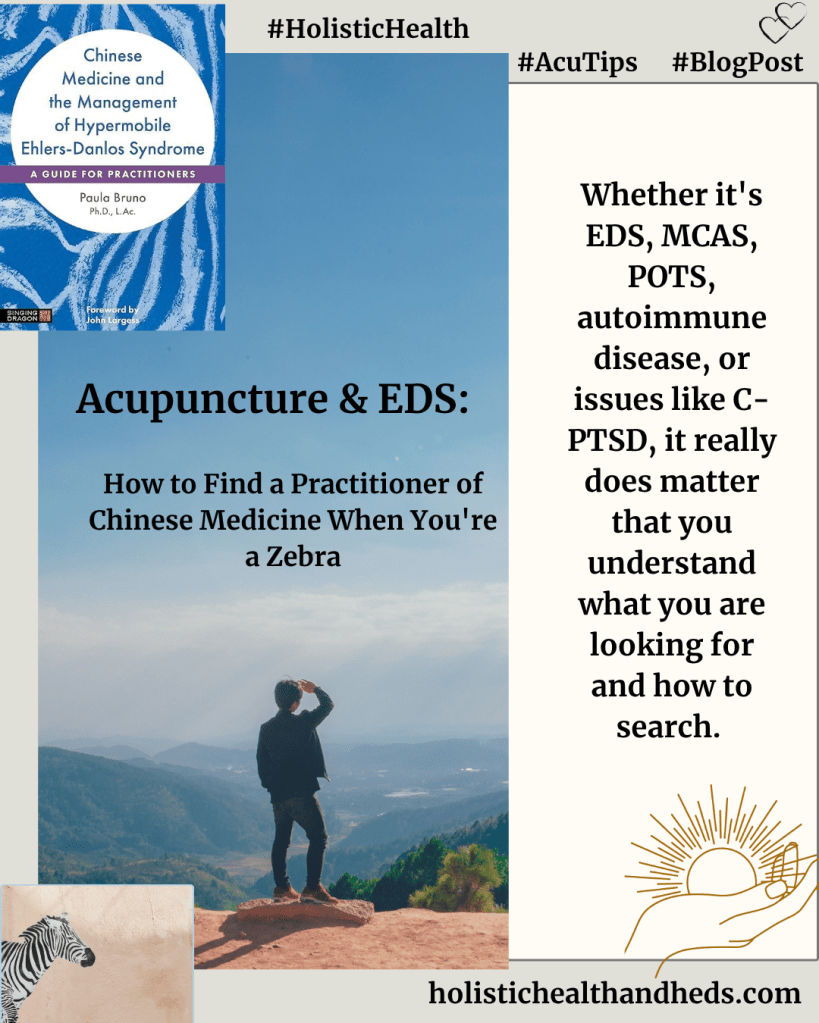
My first blog post about finding an acupuncturist was in 2019, so it’s been a while. Besides, the original essay (linked here below) was for normies and I think we can all agree that there needs to be a version of this essay for people with complex conditions. Whether it’s EDS, MCAS, POTS, autoimmune disease, or issues like C-PTSD, it really does matter that you understand what you are looking for and how to search.
This is a bit of a long read so I will start without further ado.
Credentials: What makes your licensed acupuncturist well-prepared to serve the public?
If you want Chinese medicine, then you need a licensed acupuncturist.
When you check their web site, it should say “L.Ac.” (licensed acupuncturist) and reference being an NCCAOM diplomate, which is the designation for having passed one’s board exams.1
Different states have different requirements for licensing. In Texas, a practitioner of Chinese medicine must complete two years of herbal study as part of their program and pass a rigorous board exam before they are granted a license to practice acupuncture. Anyone who wants to call themself an herbalist can do so in Texas. A person can take a weekend course (or do nothing at all) and call themselves an herbalist here. But if you want to be a licensed acupuncturist in Texas, the standards are different. Either you complete the herbal coursework and pass the herbal board exam or you cannot get a license to practice acupuncture.2
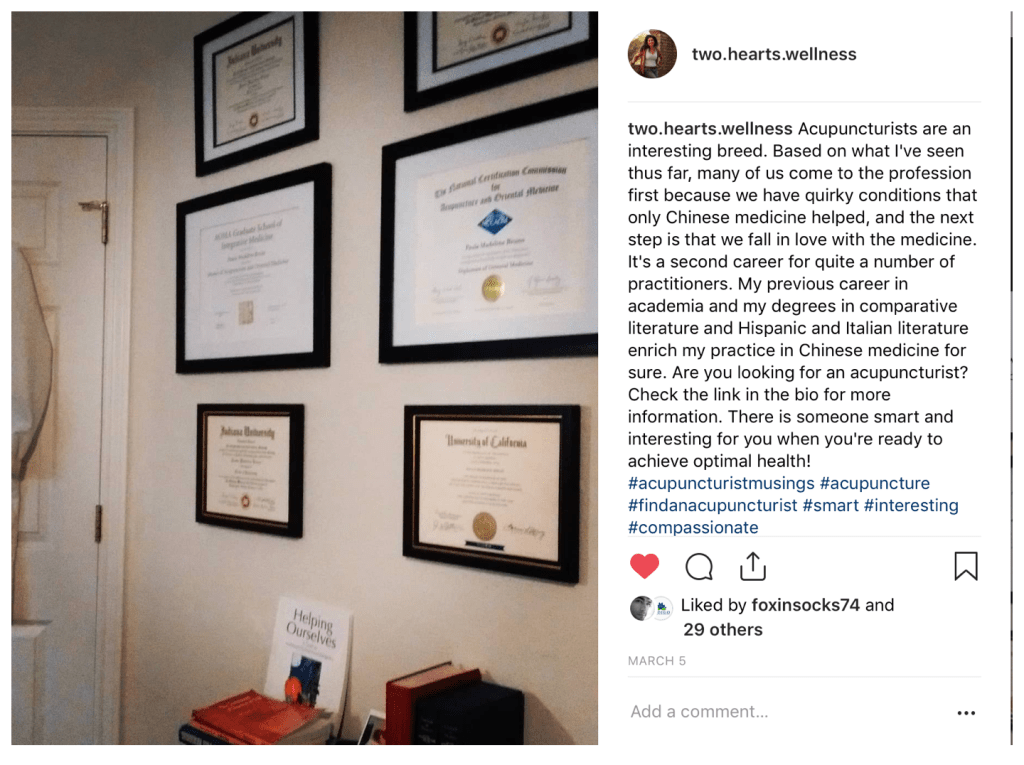
The program to become a licensed acupuncturist takes four to four and a half years to complete and, in addition to Chinese medicine, we study about the same amount of Western biomedicine as a dentist does. Someone who has a doctorate has added another year and a half to their program and this is a professional doctorate, not a PhD. It is not an MD, either.3 Any way you slice it, though, we are trained practitioners and we are licensed healthcare providers.
The OG post on ways to “Find An Acupuncturist: How To Find The Best Chinese Medicine Practitioner For What You Want To Accomplish“
—Two Hearts Wellness
Dry needling and medical acupuncture and allopathic arrogance, oh my!
This riff on “lions and tigers and bears, oh my!” from The Wizard of Oz is a nod to what Dorothy and her companions were expressing: a fear of what could be in the forest where they are traveling. Anyone on a health journey has fears of what might be lurking, and a person with complex issues has every right to be extra vigilant.
Keep in mind, though: just because someone has a biomedical degree does not mean that what they are offering is better, safer, or more effective. Dry needling, for instance, simply means that there is nothing being injected into the patient. That’s all. A PT or chiropractor popping a needle into your trigger point is dry needling. The same thing happens when your acupuncturist needles your random tender spots which, since the Tang dynasty (618-917 AD) and referenced in the classical text of that period, Thousand Ducat Prescriptions, have been known as “ashi” points. Needling painful areas that do not correspond with specific acupuncture points was not invented by modern biomedicine.
Acupuncture is generally associated with Chinese medicine. The term “medical acupuncture” is used by allopathic physicians and, depending on how strong the chiropractic association of any given state is (relative to how disempowered the acupuncturists are), some states let chiros use it too. I don’t like this term because it implies that what they are doing is real live medicine while acupuncturists are “energy healers” or some such. That is a whole different blog post (if not a book) but the long story short is this: if you want acupuncture, it might be in your best interest to try actual Chinese medicine. If you prefer “medical acupuncture” from an MD or a chiropractor, ok, but do keep in mind that terms like this may have more of a political, economic, or cultural meaning than one indicative of the medical validity of the treatment.4
~~~~~
~~~~~
Conditions: Specialty Areas
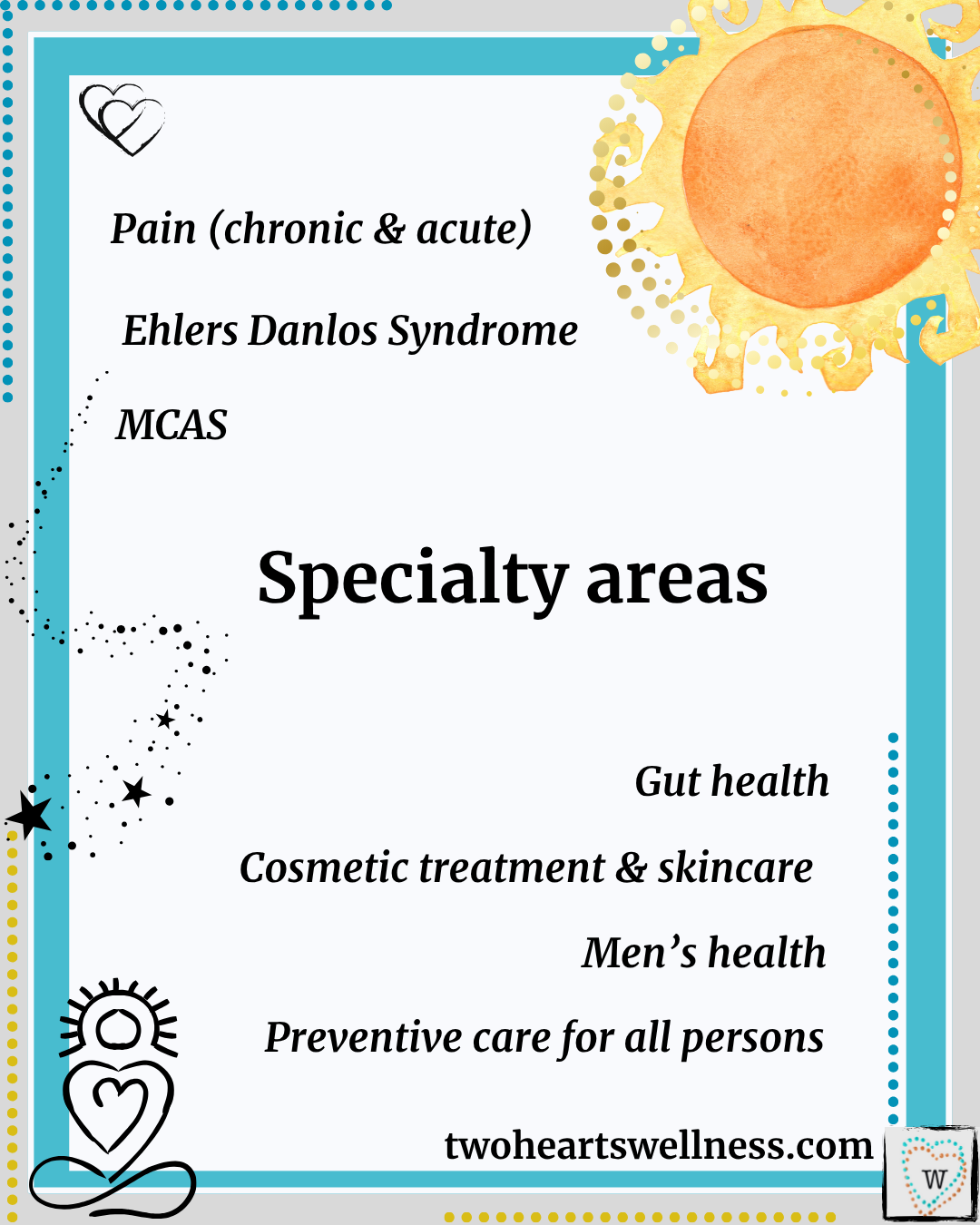
Generally, any acupuncturist is going to be good at treating pain and anxiety. Most of us are also a resource for gut health, although not everyone is obsessive about it (I am). These are the bread and butter of any practice. Specialty areas, for their part, vary and are usually listed on the practitioner’s web site.
Fertility specialists and oncology acupuncturists are a good example of specializations that have certification. A person wanting complementary cancer support might check the practitioner’s website for mention of either an International Oncology Acupuncture certificate or completion of the Fundamentals of Oncology Acupuncture series given by Memorial Sloan Kettering Cancer Center. For reproductive health, usually the practitioner will mention training via ABORM.5
Not all specialties have certificates. In my program, for example, there were two Chinese instructors who specialized in neurology (one of those instructors is now at the Cleveland Clinic). They supervised me in student clinic and I had the opportunity during that time to treat Parkinson’s disease, post-stroke, and cerebral palsy patients. I was ok but not brilliant with these cases and as a licensed practitioner now, I would refer out if someone came in with any of the aforementioned. I had classmates who loved neurology while in school and who now provide care to patients in need. These specialties exist, albeit without a certificate.
Finding an acupuncturist who treats EDS, MCAS, and/or POTS is just as challenging as finding an MD who treats these conditions.
I am working on ways to create learning opportunities for professional peers, but as of now, there is not a lot out there aside from my book, Chinese Medicine and the Management of Hypermobile Ehlers-Danlos Syndrome: A Guide for Practitioners (Singing Dragon, 2023). It is possible to find a pain specialist who can adjust to the needs of an EDS patient, though, and practitioners who know EDS and treat it certainly do exist.
And yet…I wrote my book because I penned one blog post about EDS and subsequently got emails from across the United States, from Canada, and from Europe. Practitioners asked about how to treat patients and hopeful patients wanted to know if I could recommend an acupuncturist in their area. It does take some doing to find a practitioner when we live with EDS, MCAS, and/or dysautonomia. If the practitioner you’re considering doesn’t mention any of your conditions on their site, at least be sure that this is someone who works with chronic pain.
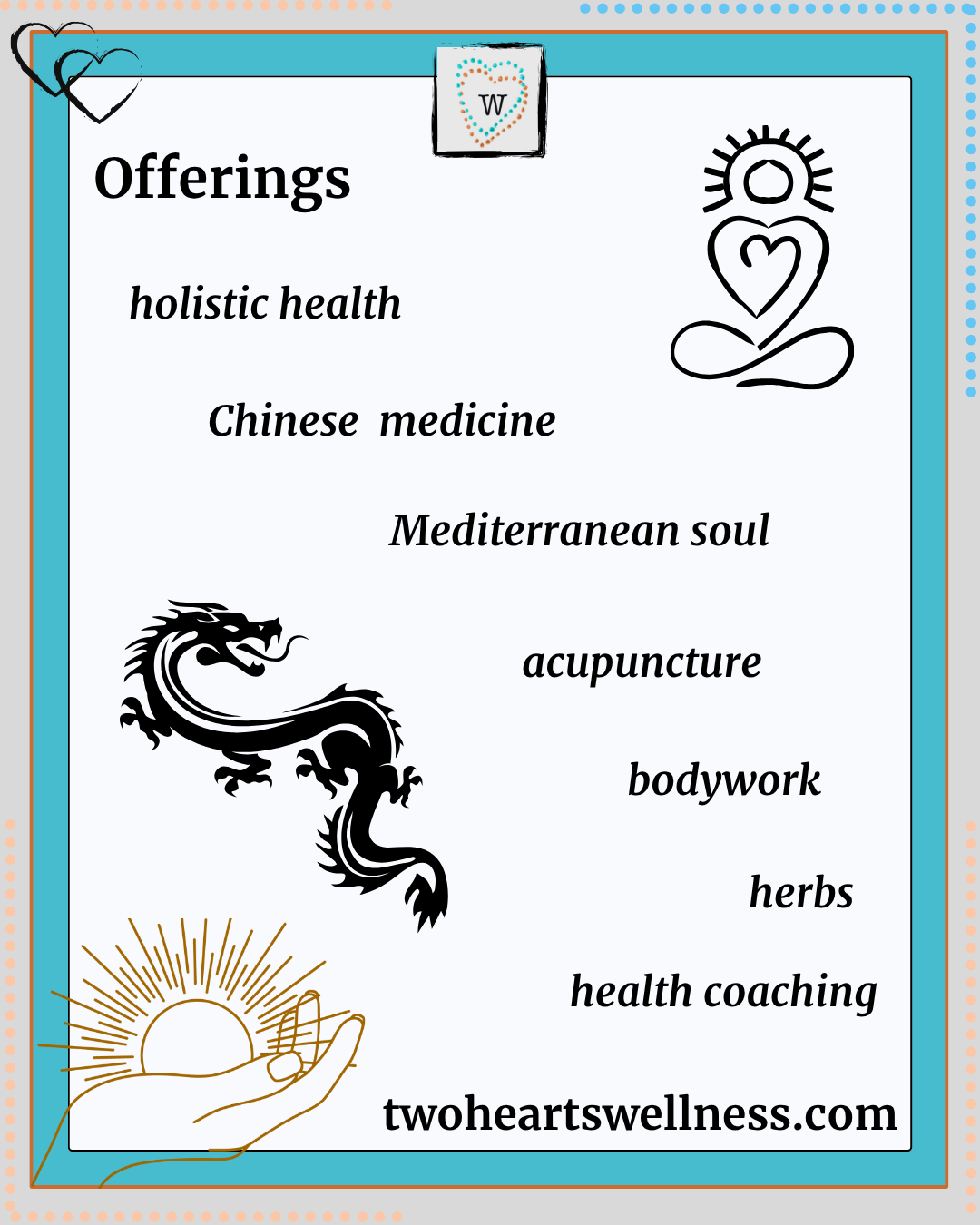
Keep in mind too, that we not only specialize in who we treat but also how we treat. What does the acupuncturist you want to see actually offer? In my practice, patients can get acupuncture, herbal medicine, tui na and other modalities of bodywork, and health coaching.6 Some practitioners are traditional Chinese medicine (TCM) oriented and others are classical. TCM is the good standard form of the medicine that most people know; classical acupuncture follows the precepts of a scholarly tradition and is often herbal medicine-focused. Some of us rely on channel theory (I do), and that is less acupuncture point-focused and more interested in the regions, or channels, of the body. You may not notice the difference, but if you’ve been to one acupuncturist and it didn’t work, you can potentially find someone else and get a different result based on their method of delivery.
One thing to notice as far as modalities are concerned is whether or not the practitioner offers moxibustion. This entails burning herbs and it’s fantastic…unless you are a mastie. If you’ve never smelled the herbs for a moxibustion treatment and you’ve got MCAS, your visit to the acupuncturist could end badly if they start burning moxa in the clinic while you’re there. On that note…MOST (but not all) practitioners do have a no-perfume policy. I sure do! If the practitioner does not, it’s a sign that the practitioner is not a good one for you if you have MCAS.
TL/DR: check their website carefully.
Connection: How Can You Tell If This Is The Right Acupuncturist For You?
Does the practitioner listen to you? If the answer is no, then that’s your answer.
Does the practitioner talk to you? I have treated so many people with medical trauma that (a) I wrote about teaching patients how to assert boundaries in my book; (b) I blogged about it; and (c) I do not touch people without asking first. Even to long-term patients, I say, “I’m going to work on your leg now; is that ok?” (or whatever the relevant body part is). I tell people what I am going to do before I do it. Some patients want a lot of explanation and others want very little, but that’s up to the patient and I talk to them as much as they want.
Good communication and respect for your boundaries is just as important as medical knowledge. That is a fact.
~~~~~
~~~~~
Expectations: What Can An Acupuncturist Do For You?
Have you ever gone to a doctor and gotten referred to another provider who sends you up the line to a specialist who puts you on a waiting list for someone who then maybe shunts you to yet another practitioner? If you’re like many of my patients, your answer to this question is an unequivocal YES. This is because doctors specialize and they are not expected to embody multiple roles. Acupuncturists usually do not have that luxury. We are expected to do a lot, to cover a broad range, and to live up to the ideals of holistic health (aka: we are expected to treat everything, aka “the whole self,” including the psyche).
That’s not realistic. If you find someone who specializes in EDS and rare or complex conditions, they can probably do a lot for you, but even then they cannot do everything.
For example: I do not specialize in female fertility, pregnancy, or post-partum (I do specialize in men’s health, including male fertility). If a potential maternity patient came to me, I would refer them out unless I felt like my knowledge of MCAS and EDS was key to their successful pregnancy and post-partum healing (and even then, I’d want an acupuncturist who was a women’s health specialist on board). If someone with EDS and post-stroke recovery as their goal came to me, I would refer out. The same goes with cancer. I’m great with lipedema and can creditably work on lymphedema, but anything other than that? I’m not talented with neurology and I do not have the experience to treat a cancer patient. The best I could do for those patients would be to consult with their practitioner but that’s about it, really.
I underwent EDS Echo’s training for healthcare professionals and was shocked when the lead instructor, a well-known MD, asked me about acupuncture. I was the only Chinese medicine practitioner in that cohort and I think she meant to be nice. She said, “I’ve wondered about acupuncture for pain…Does it work?” I was caught off guard, so I stammered out a dumb answer and things moved on to other topics. To this day I wish I’d said, “It’s like biomedicine. It doesn’t work all the time and for everyone. But it does work in many instances and at least there aren’t the horrifying side effects that can come with Pharma drugs.”
I mean, really. If biomedicine and Pharma drugs were as flawless as acupuncture is expected to be, then surely there would be fewer chronic pain patients in this world. Right? “Does it work?” is a question that contains multitudes. The short answer is: It works incredibly well for some people, for others it’s quite helpful, and for some it doesn’t do much at all. And at least if you try it (as long as you go to a licensed acupuncturist) you will experience the benefits of actual Chinese medicine and they are considerable.
~~~~~
~~~~~
Last but not least: Philosophy of practice.
Some practitioners are so connected with biomedicine that you could replace them with an MD performing “medical acupuncture” and not notice a difference. Others are completely the opposite and want nothing to do with Western medicine. Speaking for myself? I will never aspire to being a staff acupuncturist at, say, Mayo Clinic. I have zero interest in translating Chinese medicine into what might be palatable to an MD. I practice Chinese medicine, full stop. And yet…in my first career as a Spanish professor, I went from one language to another with ease, and I do the same with medicine: I am multilingual and multicultural. This I do for patients, because people with EDS and complicated conditions do need to be able to navigate within biomedicine’s purview and I do need to help them to do so in a meaningful way.
Patients have their own experiences. For some, Chinese medicine is a small part of their extremely complex healthcare strategy. If one has a rheumatologist, a GI specialist, a urogynecologist, an orthopedic surgeon, a psychiatrist, a psychotherapist, a physical therapist, a chiropractor, and me, their acupuncturist, then I am a small cog in a big wheel and that is ok. It is not my job to make this patient’s life harder by undermining their confidence in their biomedical care providers. My job here is to figure out how Chinese medicine can fit into their big picture, and to support that patient on their chosen path.
Others have been battered by Western medicine enough that they don’t want anything to do with it. In such cases (and I have many of these patients) it is my job to know when they need to go the the MD and to refer when needed. It is my job to help them to navigate communicating with their doctors. It is my duty to put their safety first and it is the law that I remain within my scope of practice. I keep all of this in mind and thus I can safely and legally and ethically treat people who do not want to be tethered to Western medicine. For some, that means health coaching (including teaching ways to communicate with their biomedical doctors) and for others, it is Chinese medicine delivered in my office.
Chinese medicine is a full system of medicine. My philosophy of practice is that an educated patient is an empowered one, and I model that at every encounter. Chinese medicine is great medicine and yes, it does work.
In summary:
This has been a long read and if you’re still with me here, I thank you for your patience and your interest.
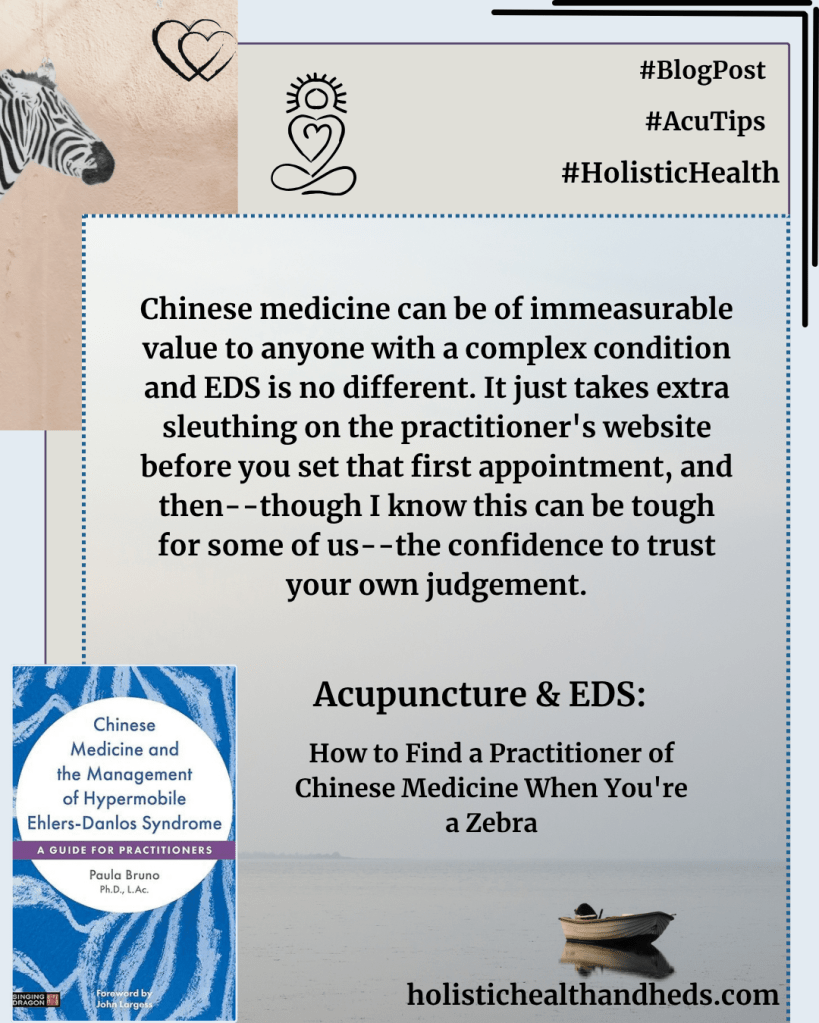
When all is said and done, you are always going to be the one who knows yourself best. Chinese medicine can be of immeasurable value to anyone with a complex condition and EDS is no different. It just takes extra sleuthing on the practitioner’s website before you set that first appointment, and then–though I know this can be tough for some of us–the confidence to trust your own judgement. Did you leave your first appointment feeling like the practitioner is knowledgeable (or at least willing to learn), that they listened to you, and that communication was smooth? Do they make it clear that they are medically bilingual and thus able to narrate your condition from both the Chinese and the Western frameworks? Are they able to meet you where you are in terms of your philosophy of practice?
Then this might be the one for you, and may you and your new acupuncturist be a great team as you work together for the benefit of the most important person in the room (and that would be you, the patient or client).
*****
*****

Dr. Paula Bruno, Ph.D., L.Ac., is a licensed acupuncturist and herbalist, an AOBTA-CP traditional Chinese bodywork therapist, an author, and a health coach. She maintains an active and growing practice at Two Hearts Wellness, her Austin, TX office. Dr. Bruno is also available for distance appointments for wellness consultation or coaching.
In her first career, she was a Spanish professor.
Dr. Bruno’s specialties as a Chinese medicine practitioner include: • Musculoskeletal health (acute or chronic pain relief; Ehlers Danlos syndrome & hypermobility support) • Digestive support, gut health, and weight loss • Aesthetic treatment, including scar revision • Men’s health • General preventative care and wellness support for all persons.
She is the author of Chinese Medicine and the Management of Hypermobile Ehlers Danlos Syndrome: A Practitioner’s Guide.
When you are ready to discover what traditional medicine plus a vibrant and engaged approach to holistic health can do for you, either contact Dr. Bruno or book an appointment online.
*****
Two Hearts Wellness/Holistic Health & hEDS does not accept paid advertising on this website
Note: Material on this web site site is not intended to diagnose, prevent, treat, or cure any disease, illness, or ailment. A Chinese medicine practitioner in Texas identifies syndrome patterns but does not diagnose illness. Material on this web site does not purport to identify syndrome patterns.
*****
*****
- The NCCAOM is in the process of changing the name to National Certification Board for Acupuncture and Herbal Medicine (NCBAHM™). The current name–National Certification Commission for Acupuncture and Oriental Medicine in full– was due for a change. The term “Oriental medicine” to designate herbal medicine is problematic on many levels. At the time of this writing they haven’t reissued diplomas or changed their website so I have yet to change my designation but expect to edit this blog post by month’s end or shortly thereafter. NCCAOM or NCBAHM diplomate…that’s what to look for on a person’s website, in any event. ↩︎
- To find out what the requirements where you are, take a look at
this interactive map and click on your state to find this information. To learn a bit more about our biomedical training–it’s substantive–and my board exam experience in that area, check this blog post here. If you want an overview of all our board exams, take a look here. ↩︎ - The professional doctorate in certain sectors of medicine is relatively new. Physical therapists, for instance, had the option to pursue a doctorate starting in the 1990s and, in 2016, their requirements changed and the DPT (Doctor of Physical Therapy) became the entry-level degree required in order to practice. This push for a professional doctorate has spread to include acupuncturists, though it is not yet mandated. Generally, the professional doctorate for practitioners of Chinese medicine adds a year or slightly more to an already-long master’s (the original entry-level degree) program, which is similar to how DPTs prepare. For an MD, a person will spend four years in medical school and three to seven years in residency, which is sometimes followed by additional fellowship or specialty training and this, too, is a professional doctorate. In contrast, a humanities M.A. usually takes up to two years to finish, while the PhD often requires five to seven years of study (and the requirements to complete said PhD are vastly different than those of a professional doctorate track). A PhD is a scholar’s degree designed to develop researchers and creators of new knowledge. To prepare for my first career as a Spanish professor, for example, I earned two MA degrees and a PhD over the course of eleven years of hard work and pretty much relentless studying in my first graduate program. My MAcOM, or Master of Acupuncture and Oriental Medicine (the OM designates herbal medicine) took me 4.5 years to complete. So it does vary, and there are differences. The MAcOM is a substantive degree, though, and the board exams certainly do weed out the unprepared. ↩︎
- If you detect a note of hostility to this term you are correct. I think it’s awful. What we, as practitioners of Chinese medicine do, is medical. Acupuncture is on loan to any of us not in China or from there, and Western medicine has benefited from Asian medicine is countless ways. What can I say, other than I spent my first career translating my cultural and literary heritage into concepts available to American students, most of whom were not of Mediterranean descent, and I am sensitive to the ways in which we all share, imbibe, and create meaning on both a local and a global scale. TL/DR: words count. ↩︎
- To see the oncology certification programs, refer to the TCM Academy of Integrative Medicine and Memorial Sloan Kettering Cancer Center. To learn more about reproductive acupuncture, refer to ABORM. ↩︎
- My offerings as a health coach are reflective of my background, in that a client can opt for ongoing sessions (as one usually experiences with standard health coaching) and what is essentially consulting, or edu-coaching, which can be very useful for people who are overwhelmed by their diagnoses and who need support to figure out how to put some puzzles pieces together and/or how to proceed. My educator self is still a pretty strong element of my identity, and–no real surprise here–I also offer health coaching for students, as you can see here at “Health Coach For College Students? Yes! (Ehlers Danlos Syndrome Edition).” ↩︎


One response to “Acupuncture & EDS: How to Find a Practitioner of Chinese Medicine When You’re a Zebra”
[…] Acupuncture & EDS: How to Find a Practitioner of Chinese Medicine When You’re a Zebra […]
LikeLike