
Part of sending your kid off to college is the worry factor. It’s pretty normal to be focused on your child’s grades, academic success, personal happiness, and whether or not your baby will be safe on the weekends and at parties. Most parents also wonder whether or not their son or daughter’s major is going to prepare them for a satisfying career after they finish. But, as a parent of a college-bound kid with Ehlers Danlos syndrome (if not also the comorbid conditions like POTS and MCAS), you have unique and pressing concerns.
I get it. And you have come to the right place if you’re seeking food for thought and hoping for some potential answers.
In a companion piece to this essay, “Health Coach For College Students? Yes! (Here’s Why),” I addressed three topics: first semester-success; body image, blood sugar, and gut health; and getting through mid-terms and finals. These are worthy topics for all students and their parents. Here, though, we’ll look at themes specific to EDS and special needs:
- Disability accommodations–accessing them without undue drama;
- Becoming an adult–building an identity (disabled or not) during college;
- Finding joy–living one’s best life with and despite chronic illness.
As mentioned in the above-referenced companion post, I was an academic in my first career. The time span from graduate school and my first semester of teaching as an associate instructor to my final year in a faculty position at Bucknell University covered eighteen years. I am now a practitioner of Chinese medicine, a health coach, and the author of Chinese Medicine and the Management of Hypermobile Ehlers Danlos Syndrome…but in my heart? I’m still Professor Bruno. What I share here regarding college success draws together all of my professional experience. My fondest hope is that you will find something useful herein, both for yourself and for your kid.
If you haven’t read it already, take a look at “Sending Your Daughter or Son Off to College: Some Healthy Advice For You And For Them.”
Disability accommodations–accessing them without undue drama:
Setting up accommodations can be a pain in the rear.1 My experience with this process is that there are students who will not do anything about their situation until either after a problem has become entrenched or right before their mid-terms when they are good and frantic. The ones who anxiously try to resolve their concerns right after class on day one are also problematic in their own way. Disability accommodation set-up has a rhythm that, when approached strategically, means a smooth path. All things in due time, truly.

Students should never feel guilty or ashamed about accommodations. They are a legal right and schools have the resources accordingly. However, it there is a big gap between rules laid out by a student disability and access office and the reality of the classroom. Is the instructor a graduate student? Or is the person teaching the class an adjunct? It could be that the one running the show is a dinosaur of a tenured professor who “doesn’t believe” in accommodations.
You just never know. Either way, the person in the front of the room has a lot of balls in the air on the first day of class and nobody likes dealing with frantic demands right before mid-terms. There are better ways to let the instructor of record know that the student has a legal request AND is cognizant that the student is responsible for it AND is aware that the instructor of record has a lot going on besides that one student.
The need for accommodations can be an opportunity to practice being proactive and diplomatic. One option is to send short email the week before classes start (“Greetings–I’d like to introduce myself. I am in your [—] class and need an accommodation. I will approach you in person after the first class with my documentation and will look forward to setting up my accommodation at your convenience. Cordially, Student Name”). The student’s polite self-introduction on day one can include a request to come to office hour at the instructor’s earliest convenience. What professor wouldn’t love this student and want to support their success? It’s perfect!
Disability accommodations can be thorny or they can be arranged smoothly. If it’s available to the student, a great option could be to work with a health coach who knows academia very, very well because that’s the coach who can meaningfully help them to navigate their health boundaries, the matter of accommodations included, within the context of college. Either way…how the student approaches things from the start will make a big difference in how the matter of accommodations affects their overall experience as a learner.
Becoming an adult and finding identities during the college years:
College is when young people try on, discard, and create their adult identities. There are added challenges when a student lives with a chronic condition. How do they find a middle ground? On one hand, it may not be helpful to a student’s long run if they narrate their self-concept primarily through the lens of disability. On the other hand, denial is not healthy and it’s not safe. Ignoring the realities of one’s health is unwise for everyone, but the consequences can be especially dire for a student with a chronic condition like EDS.
So how can your student navigate their health needs at the same time that they are adjusting to college and moving along towards their career and life goals?
Three points to ponder (and be sure to read the endnote that expands upon any that resonates for you):
- Online communities can provide a lot of meaningful support but they do have their downsides.2
- Depending on the degree of challenge and how a student lives with it, your son or daughter might thrive with the support of a therapist who is specifically trained to work with disability or chronic illness.3
- It is important to decide, early on, how much you will be relying on the institution and what you will be doing that does not involve your child’s school.4
The kind of questions a health coach will ask and the ways we support clients to visualize and put into practice self-care and wellness translates very well to the needs of a student with EDS. It’s easy to get bogged down with the challenges of daily life as a student. Having someone to help you to articulate meaningful health goals, to set priorities in order to achieve them, and to make wise choices is how a health coach will operate. What matters, in this context, is whether or not the coach knows EDS very well, and how familiar they are with academia.
Living one’s best life with and despite chronic illness:
Everyone wants to live their best life.
The college years are pivotal for everyone and health coaches have their place in the roster of support for undergraduates and graduates alike. As I point out in this essay’s companion blog post, it helps to be clear on parameters. Is the coach working with you and the student, or with the student on an individual basis? What their role is within the larger picture of the student and his or her goals and needs as an person with a chronic condition? Will they be working with your student over the course of the full semester or will they consult at intervals? Having clear expectations makes for a better experience all around.
When I work with EDS patients (those would be the people who see me for Chinese medicine) and clients (in other words, people who seek me out for health coaching), I remind them that some of what they are experiencing is pretty standard across the board. As I mention in “Living With The Seasons According To Chinese Medicine: Summer Tips For Health & Happiness For Zebras, Potsies, & Masties,” for example, extreme heat affects everyone to a certain degree. The trick, then, is to figure out how it affects the patient or client with EDS, and to develop creative ways to ameliorate the fallout.
The topics I cover in this post’s companion piece are things that affect all students to one degree or another. The question, there and here, is: but in what way does the lens of EDS change the perspective? And how can a student’s actions and approaches foster joy and excitement about school while simultaneously attending to health responsibilities that cannot be ignored? How can students get ready for a great semester, whether it’s their first as an undergraduate or that exhausting yet wonderful final year of graduate school? How can they become their unique version of their own healthy best?
College should be an enriching period of learning, expanding, and gathering tools to set a foundation for the rest of a person’s life.
Learning to live with one’s health challenges and discovering ways to live a vibrant life along with them is a task that requires creativity and dedication. Starting early, while in school, can make a huge difference to both the present and the future. How to create a healthy routine….what are the priorities… identifying the obstacles…in what way can a person learn to plan ahead but also keep an open mind and an eye for advantages? These are big questions whose answers depend on the student and the resources that they have at hand. A health coach can be an invaluable sounding board and inspiration in this context.
Does your student have the right support so that they can succeed and flourish?
*****
*****

Dr. Paula Bruno, Ph.D., L.Ac., is a licensed acupuncturist and herbalist, an AOBTA-CP traditional Chinese bodywork therapist, an author, and a health coach. She maintains an active and growing practice at Two Hearts Wellness, her Austin, TX office. Dr. Bruno is also available for distance appointments for wellness consultation or coaching.
In her first career, she was a Spanish professor.
Dr. Bruno’s specialties as a Chinese medicine practitioner include: • Musculoskeletal health (acute or chronic pain relief; Ehlers Danlos syndrome & hypermobility support) • Digestive support, gut health, and weight loss • Aesthetic treatment, including scar revision • Men’s health • General preventative care and wellness support for all persons.
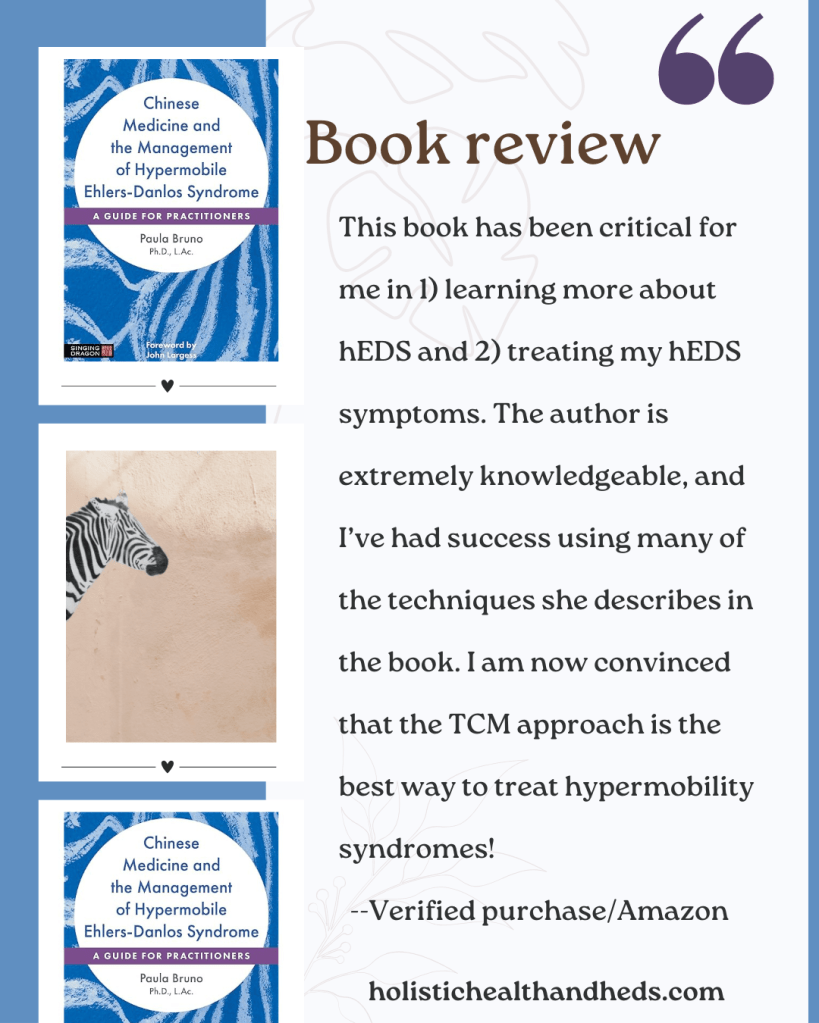
She is the author of Chinese Medicine and the Management of Hypermobile Ehlers Danlos Syndrome: A Practitioner’s Guide.
When you are ready to discover what traditional medicine plus a vibrant and engaged approach to holistic health can do for you, either contact Dr. Bruno or book an appointment online.
*****
*****
- Parents who have already been through a wringer trying to get their kids set up in the K12 school years already know how to protect their child’s rights in this arena. Still, it’s worth checking the ADA website for policy and guidelines. See “What are a public or private college-university’s responsibilities to students with disabilities?” for clear instruction regarding your college student’s entitlements. ↩︎
- Navigating chronic illness, how to frame it, what sort of attitude to have towards it, and what a person’s place within the relevant community are all topics worth considering. A good article is “Why I Left Almost Every Chronic Illness Support Group I Joined on Facebook” and it is made even better by the debate and discussion in the comments section that follows it. There really is no one right answer other than to acknowledge that this is an important topic, ESPECIALLY for young people in college who are building their adult identities. For substantive discussion of chronic illness cultures and identities, do consider reading my book, Chinese Medicine and the Management of Hypermobile Ehlers Danlos Syndrome. ↩︎
- Finding a psychotherapist for people with chronic illness can be a challenge and, in my estimation, it’s worth looking around to see what the options are BEFORE therapy becomes necessary. What is available to your student? Are there off-campus options? Consider, for instance, “A New Psychotherapeutic ‘Gold Standard’ for Chronic Pain?” and read the comments criticizing this article. Moral of the story? There is no “gold standard” and it might take trying a therapist or two before finding the one who provides meaningful support. Refer also to “Find a Chronic Illness Therapist” for information. See also “Psychosocial interventions for adults with newly diagnosed chronic disease: A systematic review” and “Study finds gaps in mental health care for people with chronic pain.” As with endnote four here below, this topic is worth an entire new blog post, if not a book-length study. ↩︎
- As I discuss in this essay’s companion post, there are factors to consider if your student has mental health concerns, especially if they are severe. Do look at “Sent Away: When students in crisis ask for help, will they be kicked off campus? Depends on the college,” for instance. Note the content warning (“Mentions of suicide and self-harm; descriptions of depression, anxiety, and other psychiatric conditions.“), but do consider reading “You’re a Case Number’: The Bureaucratic Gaps Behind Harvard’s Mental Health Leaves of Absence.” See “When Colleges Fail at Mental Health,” for a similar discussion that does include suicide. As I note in the companion post to this one, “Your average health coach is not in any way capable of meaningfully supporting such vulnerable students. However, as a parent of a student in this context, you might want to consult with a coach who knows academia very well. The coach can help you to discern how much to rely on the institution and when to consider an outside therapist or mental health support team, for instance. And if your son or daughter has a mental health support system in place, they can work with a mature, experienced health coach along with their therapist. There is a place for health coaching when the student is vulnerable but […] it’s a matter of student safety and an issue of ‘as long as the coach knows when to refer out or to defer to a therapist or other medical care provider.’” ↩︎
Two Hearts Wellness/Holistic Health & hEDS does not accept paid advertising on this website
Note: Material on this web site site is not intended to diagnose, prevent, treat, or cure any disease, illness, or ailment. A Chinese medicine practitioner in Texas identifies syndrome patterns but does not diagnose illness. Material on this web site does not purport to identify syndrome patterns.
 Holistic Health and hEDS
One response to “Health Coach For College Students? Yes! (Ehlers Danlos Syndrome Edition)”
[…] Health Coach For College Students? Yes! (Ehlers Danlos Syndrome Edition) 2024 Dr. Paula Bruno […]
LikeLike