
Do you have lumps and bumps or symmetrical pockets of fat on your legs? What about your arms, hips, abdomen, or buttocks? If so, you might have lipedema, a chronic condition that has no cure and that can, instead, progress and even lead to lymphedema, a similar (but not the same) disorder. Though there are no specific tests to screen for it, your doctor will diagnose you in an office visit and–let’s be real here–if you’ve got it, you can feel it. Lipedema can be painful and accompanied by easy bruising, fatigue, and brain fog. The tangible lumps and the visible puffiness can be pretty hard to miss, too.
People with EDS and the common comorbidities, especially MCAS and POTS, are no stranger to lipedema. Women tend to get it more than men do, and hormonal shifts can affect how it manifests. It can co-occur with venous diseases, including chronic venous insufficiency (CVI). Lipedema most certainly can present in people with obesity. Keep in mind, though, that weight gain or weight loss does not change the fact of lipedema; even extremely thin people can develop the characteristic pockets of fat that are a hallmark of this loose connective tissue disease.
*****
*****
Lipedema and lymphedema might look similar but they are not the same. Lymphedema is usually unilateral and is an issue of impaired lymphatic drainage. One common reason for lymphedema is cancer treatment or other injury to lymph glands that leaves the swollen limb or region enlarged due to impaired lymph flow. The cause of lipedema is unknown and it is a condition that arises when fat (“lipid”) pockets, normally bilateral, affect flow and lead to swollen tissue.1
Anyone can develop lipedema. However, it is especially important for those of us who live with connective tissue disorders to be aware of this challenge to loose connective tissue integrity. When possible, it’s (obviously) best try to avoid developing it (Chinese medicine and a preventive care program can be a great resource for you if you’ve got concerns). And if prevention is no longer an option? Then we need to know about options for ameliorating or resolving lipedema once it is has taken hold.
Chinese medicine’s view of lipedema & what we can do for you.
A practitioner of Chinese medicine does not diagnose the way an MD would. Instead, we identify syndrome patterns and treat accordingly. Lipedema falls under the category of pathological Dampness and is treated according to the standards for such conditions. We might also take note of fatigue, weak digestion, water retention, and a sense of heaviness to the limbs and identify this as Spleen qi deficiency. Blood stasis might be on your chart if your practitioner notes bruises and you report a sense of dull, persistent pain in the affected areas. The fat lumps and fibrosis generally will fall under the category of Phlegm, which is when Dampness congeals.
Western biomedicine relies on compression therapy, lymphatic drainage massage, medication and supplements, and lifestyle guidance, including stress management, to support patients with lipedema. A less-conservative approach might include bariatric surgery or liposuction.
Chinese medicine offers strategies that align with the conservative treatment approach, but we have our value system and methods and not everything we do is going to be what an allopathic physician might choose. Everyone’s presentation is unique, and so should be the treatment strategy. For some people, working with their biomedical doctor is comforting, familiar, effective, and sufficient. For others, this is not so the case and, perhaps, Chinese medicine turns out to be their better option.
Again, it is important to keep in mind that everyone is different. Lipedema presentations can show up as looking normal but maybe somewhat lumpy to being visibly disfigured and in quite a bit of pain. Each person who lives with this condition can find greater success by figuring out what works for them and being consistent. To that end, your practitioner of Chinese medicine will tailor your treatment plan to your unique needs. You can also expect that we will talk to you about warming foods and drying herbs, stress reduction and lifestyle interventions, and options for reducing fibrosis. These include tui na (Chinese manual therapy, pronounced “twee nah” and akin to massage), cupping, or gua sha.
*****

*****
Just as patients are unique, so are practitioners. Gentleness and consistency work. I’ve seen it in my practice, anyway. I, personally, do not think that vigorously breaking up the fibrotic tissue is healthy, especially when the patient has EDS. Someone who has small areas of lipedema on their hips or thighs and a vigorous constitution, okay fine, I will be somewhat fierce with those fat lumps. But most of my lipedema patients have had EDS and I do not think that pounding zebra tissue into submission is necessarily in their best interests. Instead, I espouse gentle, consistent treatment that is supported by at-home practices like elevating the limbs in the yoga posture known as “legs up the wall” (Viparita Karani), temperate movement (walking, swimming, and/or tai chi), realistic diet change, and the judicious use of herbal formulas.
The manual therapy is important though. Part of a Chinese medicine treatment strategy for lipedema will be to nurture the Spleen and boost qi circulation, warm channels, and dry Dampness. In a tui na treatment that may seem almost the same as a lymphatic drainage massage, the patient finds relief as the body fluid moves to its appropriate locations as a result of the therapy. If the practitioner has excellent palpation skills, they can usually find a good place to begin gently and mindfully breaking up fibrosis. The treatment should not be painful and your practitioner should usually be able to give you a timeline and set expectations at the first visit.
People with EDS, MCAS, and/or POTS already have a lot to deal with without adding lipedema to the complex conditions already present. But Chinese medicine can help you, and if you find the right practitioner and work steadily, it is possible to create change.
Have you ever thought of trying Chinese medicine for lipedema?
*****
*****

Dr. Paula Bruno, Ph.D., L.Ac., is a licensed acupuncturist and herbalist, an AOBTA-CP traditional Chinese bodywork therapist, an author, and a health coach. She maintains an active and growing practice at Two Hearts Wellness, her Austin, TX office. Dr. Bruno is also available for distance appointments for wellness consultation or coaching.
In her first career, she was a Spanish professor.
Dr. Bruno’s specialties as a Chinese medicine practitioner include: • Musculoskeletal health (acute or chronic pain relief; Ehlers Danlos syndrome & hypermobility support) • Digestive support, gut health, and weight loss • Aesthetic treatment, including scar revision • Men’s health • General preventative care and wellness support for all persons.
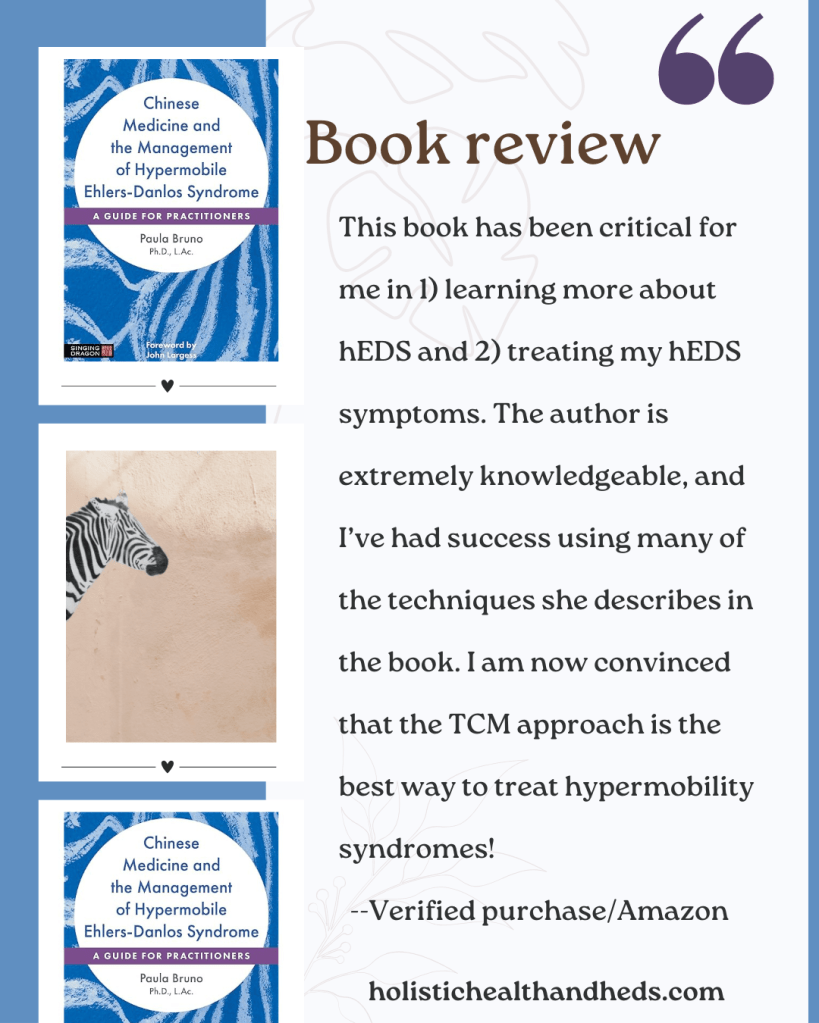
She is the author of Chinese Medicine and the Management of Hypermobile Ehlers Danlos Syndrome: A Practitioner’s Guide.
When you are ready to discover what traditional medicine plus a vibrant and engaged approach to holistic health can do for you, either contact Dr. Bruno or book an appointment online.
*****

*****
Two Hearts Wellness/Holistic Health & hEDS does not accept paid advertising on this website
Note: Material on this web site site is not intended to diagnose, prevent, treat, or cure any disease, illness, or ailment. A Chinese medicine practitioner in Texas identifies syndrome patterns but does not diagnose illness. Material on this web site does not purport to identify syndrome patterns.
*****
- For a useful comparison between lymphedema and lipedema, refer to “Lymphedema vs lipedema: Similar but different” (2024). ↩︎
 Holistic Health and hEDS