Have you ever wondered about cosmetic acupuncture? Common questions from anyone, whether a normie or a zebra, relate to things like whether or not it’s safe and if it’s worth the investment. We all want to know about that before we plunk down our payment for services rendered. But being a member of the EDS community means that there are extra questions to ask before setting your appointment for an aesthetic treatment. (And this goes for all types of EDS, not just the hypermobile, especially if MCAS and POTS are also in the chat).
As with all questions related to Ehlers Danlos syndrome, the answer always is the same: “It depends.” It depends on how loose and stretchy the skin is; it depends on degree of reactivity if MCAS is an issue; it depends on how a person’s overall health presents.1 And so forth. I can’t answer all the questions in this blog post, consequently, but at least I can share valuable information and useful things to keep in mind before you speak to a practitioner near you.
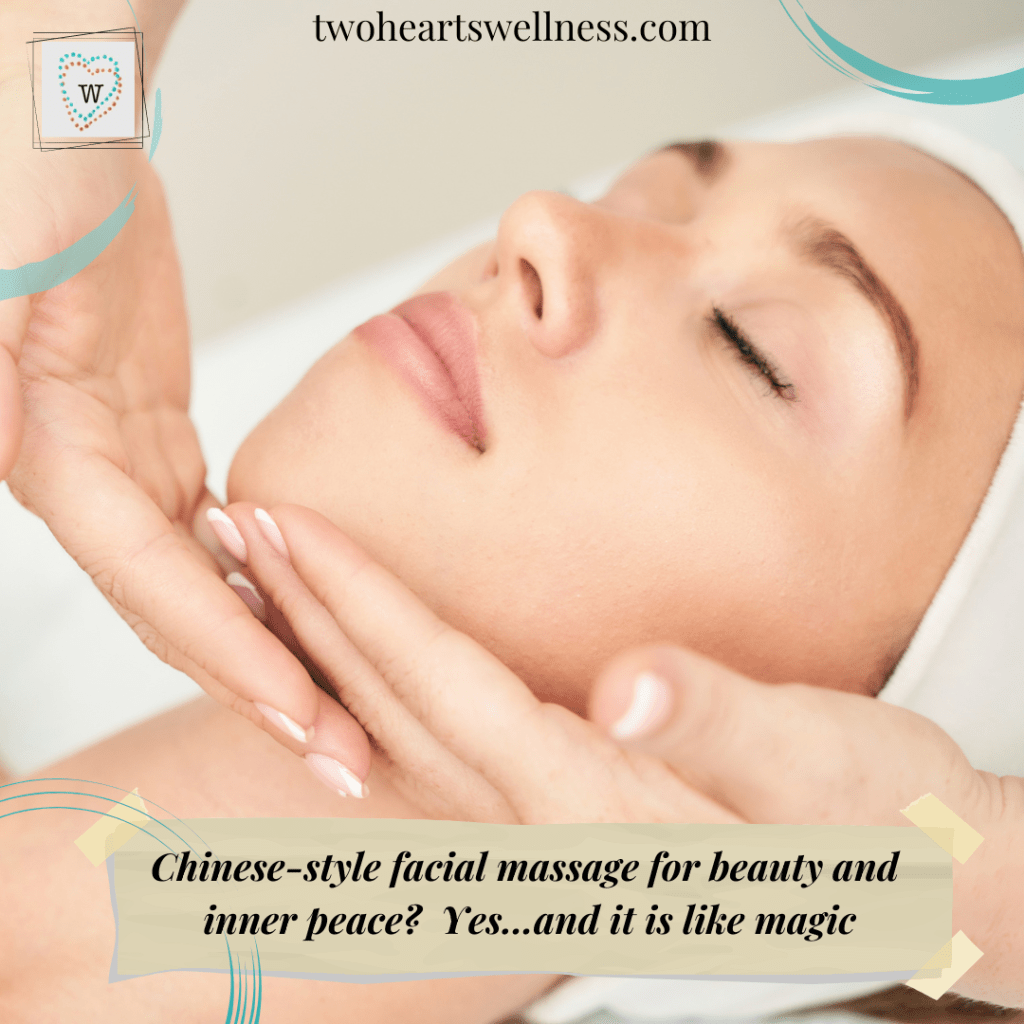
First and foremost, if you’re considering cosmetic treatment…please know there is way more to it than just acupuncture. You actually do not need acupuncture or microneedling to achieve the benefits of Chinese medicine for aesthetic purposes.
*****
*****
~~Your Options Include~~
Facial cupping with glass cups:
Cupping is a method that pulls, and with glass cups that are meant for facial treatment this is gentle suction (unlike the cupping that leaves the big bruise-like circles that you see on people’s shoulders). For a person with lax skin, this may or may not be useful. However, a practitioner who knows how to work with EDS skin will know how and where to work to get optimal results. It is entirely possible to ameliorate puffiness in the face and create a relatively more tightened look with judicious cupping. This is a treatment that can sculpt cheekbones and jawlines.
Gua sha:
Gua sha is the opposite of cupping. It is a pushing technique. A gua sha treatment for the face should not leave marks. Instead, with gentle strokes of a jade instrument, your practitioner will address puffiness, tight muscles, scars, and any fascial adhesions.2 A jade gua sha treatment should be relaxing and leave you with better circulation and brighter skin as a result.
Jade roller:
A jade roller is somewhat like the gua sha tool, but the technique of rolling (rather than gently scraping) the jade across the planes of the face will has a slightly different feel to it. The small end of the roller is great for around the eyes, and the larger end is for the cheekbones and jawline and neck. The effects are similar, however. I would probably choose the jade roller over the gua sha tool in instance of very loose, velvety skin.
For more information on gua sha and tui na, see “Gua Sha & Tui Na: Two Healing Practices That Two Hearts Wellness Clients Love.” See also “Jade Instruments And Ancient Traditions: Chinese Beauty Treatments That You Will Love.“
twoheartswellness.com
Tui na:
The cups pull and the jade roller and gua sha tool push. Tui na (pronounced “twee nah” and meaning “push” and “grasp”) combines both of these approaches. This is manual therapy, akin to massage. Whether or not it is aesthetically beneficial to anyone, zebra or normie, depends on the practitioner’s training and experience. In the case of lipedema, tui na is extremely useful and almost always going to be part of the treatment. For the face, tui na can have a similar effect to what you’d get from the above-listed means of pushing or pulling. It can be helpful for puffiness, relaxing the muscles, softening scars, and/or sculpting the tissue. Tui na treatment is also good for relaxing and feeling at one with the universe (just saying).
Acupuncture & Microneedling:
In the context of facial rejuvenation treatments for people with EDS, the acupuncture treatment may get better results if the focus is on muscles rather than the surface skin. This is a slight departure from the norms of cosmetic treatments that are directed at surface wrinkles and have the goal of “collagen boosting.” Acupuncture that softens tight muscles and undoes the marks of long-held emotions like anxiety or sorrow can certainly make anyone’s face look younger and healthier.
Microneedling is expensive and might not be worth it when its purpose is to restore collagen. What’s there to restore for someone with EDS?
That doesn’t mean it’s not worthwhile. When I first started offering microneedling, for example, I did perform a series of treatments on a long-term patient who allowed me to practice on their face (at no extra charge to the patient). It did make their skin look more glowing and pretty, true. But this was someone with clEDS and their skin remained as soft and stretchy as before, the nicer texture and glow notwithstanding.3
*****
*****
Herbal medicine and/or nutrition education:
If you are trying to resolve acne or other inflammatory conditions your acupuncturist might prescribe an herbal formula. We also have topical options available for you (and you will want to patch test if you have MCAS or other concerns). Practitioners of Chinese medicine do study nutrition as part of their coursework. It depends on their specialty areas, but your practitioner may have a respectable knowledge of nutrition or they might be a gut-health super-specialist (I am).4 Most important for you is that they listen to you when you speak of MCAS or other sensitivities and address your concerns directly. But yes, herbs and nutrition can certainly be a key (and beneficial) part of your cosmetic program.
Red, yellow, or blue LED:
Red LED is typically used to “boost collagen” and that is worthless for someone with EDS. What are we boosting here? Yellow LED moves lymph and fluid. Blue is used against bacteria. My experience with all of these options is that the red is great for pain relief and it’s relaxing (as long as the person doesn’t have MCAS, which I will address here in a minute). The yellow light can be good for patients with puffinesss or edema, including lipedema. Blue can help when acne is involved. In sum: the LED can be a valuable modality to add to the treatment…with a few caveats.
~~Factors to consider~~
First question: have you ever had an acupuncture treatment of any kind before your foray into Chinese medicine for cosmetic purposes? If you have POTS, for instance, you might want to know that you’re not someone who experiences needle shock before trying a needle-heavy treatment.
Needle shock isn’t quite as scary as it sounds. It’s a POTS episode of sorts and I’ve only had it happen to me once in the ten years I’ve been practicing. I was an intern in student clinic, and when I distinctly remember it because (A) I was a very junior student intern so it did freak me out and (B) I had only placed some four needles and then the patient started sweating and shaking slightly before turning extremely pale. I’m sure she would have fainted had she been standing. POTSies know the drill with this scenario but still, better to avoid, right? And what we do when this happens is remove the needles and give the patient some fruit juice or a piece of ginger candy and water and they recover quickly. (For the record: none of my POTSies have experienced needle shock during an acupuncture treatment but that doesn’t mean it can’t happen).
*****
*****
For people with MCAS, it really depends. You definitely want to patch test everything before it goes on your face. I let patients smell the oils I use first, we may try it on their arm or hand, and I’m mindful. As a mastie myself, I am hyper-aware of hypersensitivities. Not all practitioners are, but acupuncturists are usually good about not allowing perfumes in their offices. Most of us have patients who can’t tolerate one thing or the other, so I would hope that they will listen when you bring up MCS, histamine intolerance, or MCAS. But it’s not just smells or oils that could be problematic. I haven’t seen it my practice, but I have heard of cases where the Mast Cell Gods did become angered by LED (and I have experienced this on my face). Consequently, it is always important to have a trial run before going for a facial treatment combined with light therapy.
Keep in mind that you don’t need a ton of needles to achieve results. Some approaches, like the Mei Zen method, rely on many (albeit tiny) Korean hand needles. Microneedling relies on lots of puncturing. But other approaches may use only a few needles that are targeted to specific areas, like frown lines or melasma patches. If you are sensitive, there are options.
You do need to communicate with your practitioner though. You may get better results with non-insertive treatment if you have MCAS. If you have dermographia, you might want to pass on the gua sha. If your TMJ is volatile and your jaw pops out of joint in response to the passing of a gentle breeze, you may want to avoid gua sha on the jawline. Speak to your practitioner about your concerns, and if they seem clueless or as though they don’t listen to you, that’s a no-go. But the same goes for getting a facial at a spa when you have EDS or MCAS or POTS.
If the practitioner doesn’t listen, that’s all you need to know before you decide not to book a treatment.
~~In Conclusion (For Now)~~
The TL/DR? Make sure you communicate with your practitioner (and take note of whether they listen), patch test products if there is any concern about reactivity, and be focused on what you can accomplish (smoother face, brighter complexion, feeling pampered), not what you cannot do (aka “boost collagen”).
In my own practice, I have successfully delivered scar revision, facial rejuvenation, and lipedema reduction treatments to patients with EDS and comorbid conditions. The results may not be “boosted collagen,” but the patients and I went into the treatment with the understanding that we would focus on things like soothing tight muscles for a more relaxed expression, brightening the skin, sculpting tissue so it drapes on the cheekbones or jawline in a more pleasing way, and/or smoothing puffy tissue and reducing lumps in the case of lipedema. With realistic expectations, excellent communication, and the benefit of an EDS-experienced practitioner, my patients have been happy with their outcomes and so am I. Chinese medicine has a lot to offer people who want cosmetic treatments, they are fun to perform, and people usually love them, so…
Bottom line? Each person with EDS is unique and requires very personalized treatment but it certainly is possible to get wonderful results from a cosmetic treatment.
*****
*****

Dr. Paula Bruno, Ph.D., L.Ac., is a licensed acupuncturist and herbalist, an AOBTA-CP traditional Chinese bodywork therapist, an author, and a health coach. She maintains an active and growing practice at Two Hearts Wellness, her Austin, TX office. Dr. Bruno is also available for distance appointments for wellness consultation or coaching.
In her first career, she was a Spanish professor.
Dr. Bruno’s specialties as a Chinese medicine practitioner include: • Musculoskeletal health (acute or chronic pain relief; Ehlers Danlos syndrome & hypermobility support) • Digestive support, gut health, and weight loss • Aesthetic treatment, including scar revision • Men’s health • General preventative care and wellness support for all persons.
She is the author of Chinese Medicine and the Management of Hypermobile Ehlers Danlos Syndrome: A Practitioner’s Guide.
When you are ready to discover what traditional medicine plus a vibrant and engaged approach to holistic health can do for you, either contact Dr. Bruno or book an appointment online.
*****
Two Hearts Wellness/Holistic Health & hEDS does not accept paid advertising on this website
Note: Material on this web site site is not intended to diagnose, prevent, treat, or cure any disease, illness, or ailment. A Chinese medicine practitioner in Texas identifies syndrome patterns but does not diagnose illness. Material on this web site does not purport to identify syndrome patterns.
*****
- Anyone going for any cosmetic treatment will be asked about certain health conditions anyway (bleeding disorders, diabetes, pregnancy, etc.). EDS, per se, is not a contraindication but autoimmune disease is, and so is MCAS for some modalities. Because some of our common conditions are not as well-known outside of the community, it is important that anyone seeking aesthetic treatment is very clear about what’s what before the treatment begins. For comparison’s sake, see also ” Revisiting Ehlers Danlos Syndrome As A Relative Contraindication To Elective Plastic Surgery: A Retrospective Matched Cohort Study” (2024). As the authors note, EDS is considered a “relative contraindication” for plastic surgery but their findings show that the risk to people with EDS is not that different from normies and, consequently, they argue that this condition should not be a contraindication at all. In my professional experience, Chinese medicine’s cosmetic treatments for people with EDS can be safe, just as they are safe for normies BUT for two caveats. These are: (1). It is important for the practitioner to know EDS and to be aware of what needs extra care and attention and (2) If there’s MCAS involved or any autoimmune conditions, it’s probably better to avoid acupuncture and instead, at least to start, to stick with cupping, gua sha, tui na, or the jade roller. Each case is different though, so having an EDS-aware practitioner is the key safety requirement before trying cosmetic treatments. ↩︎
- Scar treatment is a different category altogether and it’s a good idea to go to someone who actually specializes in scar treatment if that is your goal. Scar work is art work and when the canvas has EDS or MCAS, an excellent job requires specific medical knowledge on top of the practitioner’s technical and artistic abilities. To discover what Chinese medicine can do for scars, refer to “Every Scar Tells a Story (Physical Scars and What to Consider About Yours).” ↩︎
- To be honest, I don’t know that microneedling is worth the expense for people with EDS. The patient who allowed me to practice on them did see brighter, more vibrant skin as a result of the treatment but a good tui na combined with gua sha or cupping treatment could achieve that effect with less pain and expense. I wrote about microneedling and EDS in my book, Chinese Medicine and the Management of Hypermobile Ehlers Danlos Syndrome (Singing Dragon, 2023), and suggested that the practitioner does a test run with Korean hand needles if a patient feels strongly about wanting to try microneedling (p. 201). Often used for fine lines, Korean hand needles are tiny, fine, and barely more than an inch long in total (handle and needle). ↩︎
- In Chinese medicine we have, amongst our luminaries, the 13th century scholar-physician, Li Gao, whose focus on the digestive system gave birth to the Earth (or Spleen) School. It is not uncommon for practitioners to view the digestive system as the center of wellbeing even today and I am certainly one such being. For some thoughts on being a mastie during the holiday season, for instance, refer to “Holidays and MCAS: Surviving and Thriving From November To January.” If you would like to follow up on the subject, refer also to “Gut & Digestive Health: Three Reasons Why It Matters & How Chinese Medicine Can Improve Yours” (this is written for normies and is published at my main website, Two Hearts Wellness. Still, it has good information for anyone who wants to learn what Chinese medicine can do for their innards). ↩︎
 Holistic Health and hEDS