Ah, the end of summer…fall will soon be upon us and with this change of season comes an invitation to review how we interact with our environment. Autumn is also a time to consider themes of impermanence and change, don’t you think? The trees shed their leaves and summer says its goodbyes, and so another year winds to an end.
Will you make it a transition period of healthy change? How much weight do you give to the idea of seasonal living?
“Living seasonally according to Chinese medicine’s values has become a favorite topic of mine and there are other posts on the subject if you are equally charmed. Refer to Living With The Seasons According To Chinese Medicine: Spring Tips For Health And Happiness and its companion pieces, Living With The Seasons According To Chinese Medicine: Summer Tips For Health And Happiness and Late Summer: Health, Happiness, & Strategies for further exploration of this theme. An essay for winter will be forthcoming, so stay tuned…“
–P. Bruno, “Are You Ready For Fall? (Living With the Seasons According to Chinese Medicine)“
Note: I highly recommend reading the above-linked essay, “Are you Ready for Fall?” because it contains the general information about living with the seasons according to Chinese medicine. What you are reading now focuses more on what’s important for people with EDS, MCAS, and/or POTS and assumes the knowledge shared by the companion piece at Two Hearts Wellness.1
As always, when I discuss seasonal living, I focus on four main categories: environment, organs, food, and mood.
Environment:
In Chinese medicine, we view the concept of balance from the perspective of yin and yang. Biomedicine speaks of homeostasis (not too much, not too little), which is similar, but Chinese thought gives a philosophical value to the concept as well. What is important about this idea in the context of environment, seasonal living, and EDS is the facet of it that truly views humanity as reflective of an environment that, in turn, reflects back to the humans it surrounds.
Any time we consider the role of the environment in Chinese medicine, it is valuable to refocus on people who are hypersensitive and/or unable to thermoregulate properly. We who live with MCAS or POTS, especially, are the proverbial canaries in the coal mine of life. We most certainly do reflect our environment and our environment most definitely reflects us.
Do you get cold feet or hands during fall and winter? People who don’t live with these conditions do not understand what it means when we say that our hands and/or feet are cold. It can help to be creative.
It may be helpful to experiment with things like rubbing essential oil on your feet before bed. Using a carrier oil that you know won’t set off a flare combined with a few drops of cinnamon, rosemary, or lemongrass oil can improve circulation and perhaps ameliorate the cold of your feet. If epsom salt soaks feel good for you, those might be an option. I’m not as bad as I was when I was younger, but my feet would turn to blocks of ice when I was in graduate school in Indiana and I still remember now how painful that was. It helped to wear a wool cap on my head and to wrap my neck with a fuzzy scarf, and to layer socks on top of my oiled feet. Wrapping a fuzzy scarf around your rib cage and shoulders may help with icy hands. Working with a Chinese medicine practitioner who can customize herbal formulas for you might also be a good option at this time.
If you know, you know….right?
Organs:
Each season has an organ and its pair associated with it. For autumn, this would be the Lung and the Large Intestine and these, you will notice, are the organs of inspiration and elimination. During fall, colds and flu are on the rise and cold weather does actually affect our digestive process. Even normies need to worry about allergies, asthma, and skin conditions more than usual during the fall. Anyone who lives where it’s truly cold might have already noticed that the weather can affection digestive process, whether or not EDS is a factor.2
Digestion for people with EDS, dysautonomia, delayed gastric emptying, and/or MCAS is a whole new blog post (one that will be forthcoming, trust), but for the moment, allow me to bring up the subject of abdominal tui na if your intestines don’t move easily. Tui na (pronounced “twee nah”) is a modality of Chinese medicine akin to massage and acupressure combined. It’s amazing, and a gentle treatment on your abdomen may possibly be a wonderful option for you.
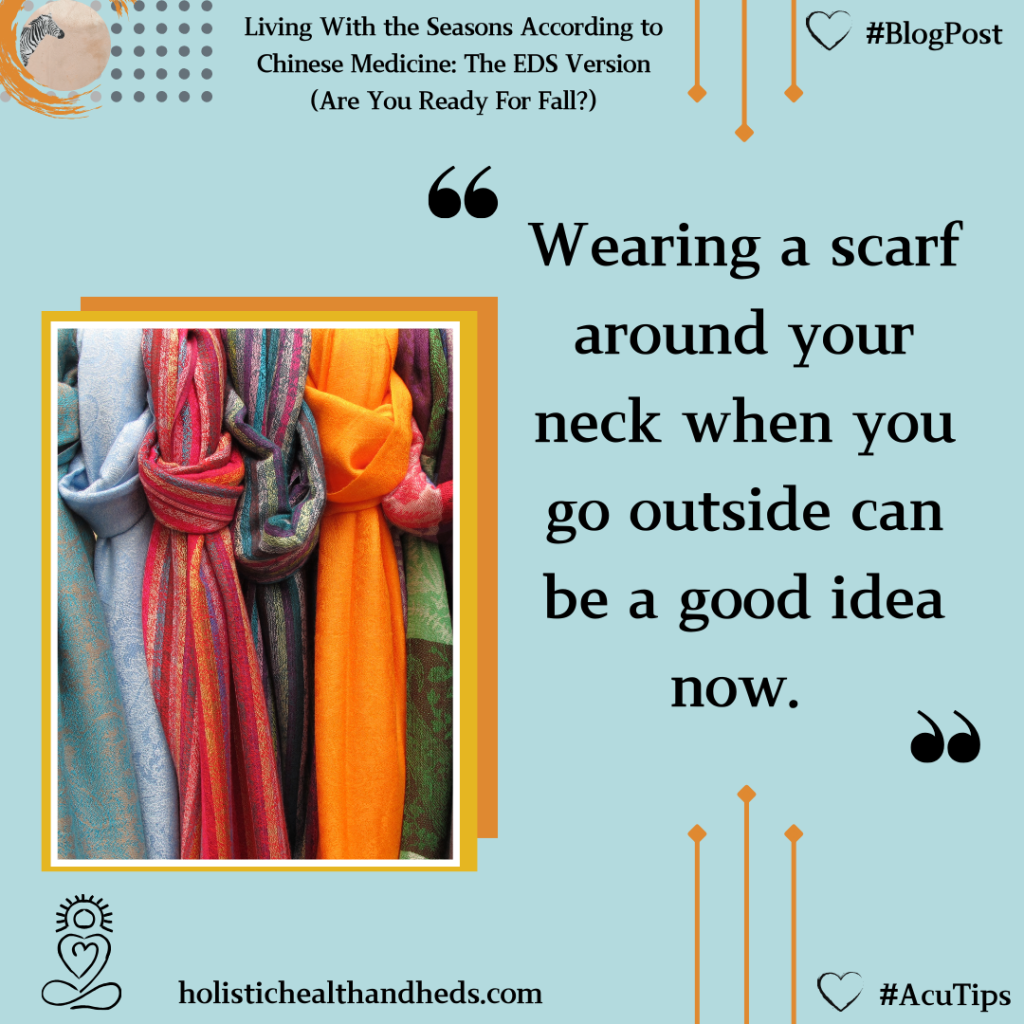
When we are a member of the EDS, MCAS, and/or POTS communities we want to be aware of how cold affects our digestion, though, and we do want to be especially careful about our respiratory system. Wearing a scarf around your neck when you go outside can be a good idea now. If you still mask (it is smart to still mask) then feel affirmed in your choice and do not for a minute feel shame about it. You are protecting your Lung health and this is a good thing! If you tend towards bowel issues, now might be a good time to start tracking how things are going for you. Is it time, maybe, to shift your nutritional strategies?
Food:
Seasonal eating is good for just about everyone whenever possible and it’s hard to make generalizations about what may or may not be healthiest for people with EDS. But autumn calls for more warming food and less cold, so the salads you enjoyed during the summer can be replaced by soups and stews and warming spices like ginger and cinnamon and rosemary and fennel.
Eating many small meals rather than one or two big ones can ease the burden on your digestive tract. Experimenting with new flavors or trying new recipes can add some fun to the endeavor. I just recently discovered Shared Cultures, for example, and their misos are (a) small-batch, amazing, creative, and yummy and (b) made without soy. Anyone who needs to focus on salt intake might love this small business. Another super favorite of mine is Rancho Gordo for healthy legumes. As much as possible, finding ways to eat well and creatively is one thing that we can try to control.
Especially for the masties amongst us (I am one), it really makes a difference to find things we can eat and enjoy.
Mood:
Fall and winter are when people get the blues, or seasonal affective disorder. But chronic illness can mean that you already started from a position of anxiety or sadness. If this is so, it might help you to look at things from the perspective of Chinese medicine. For Chinese medicine, the Lung is associated with the emotion of grief. The Large Intestine relates to the idea of letting go. If you do decide to try Chinese medicine at this time, your practitioner will probably give you treatment to nourish these organs, especially if you are sad.
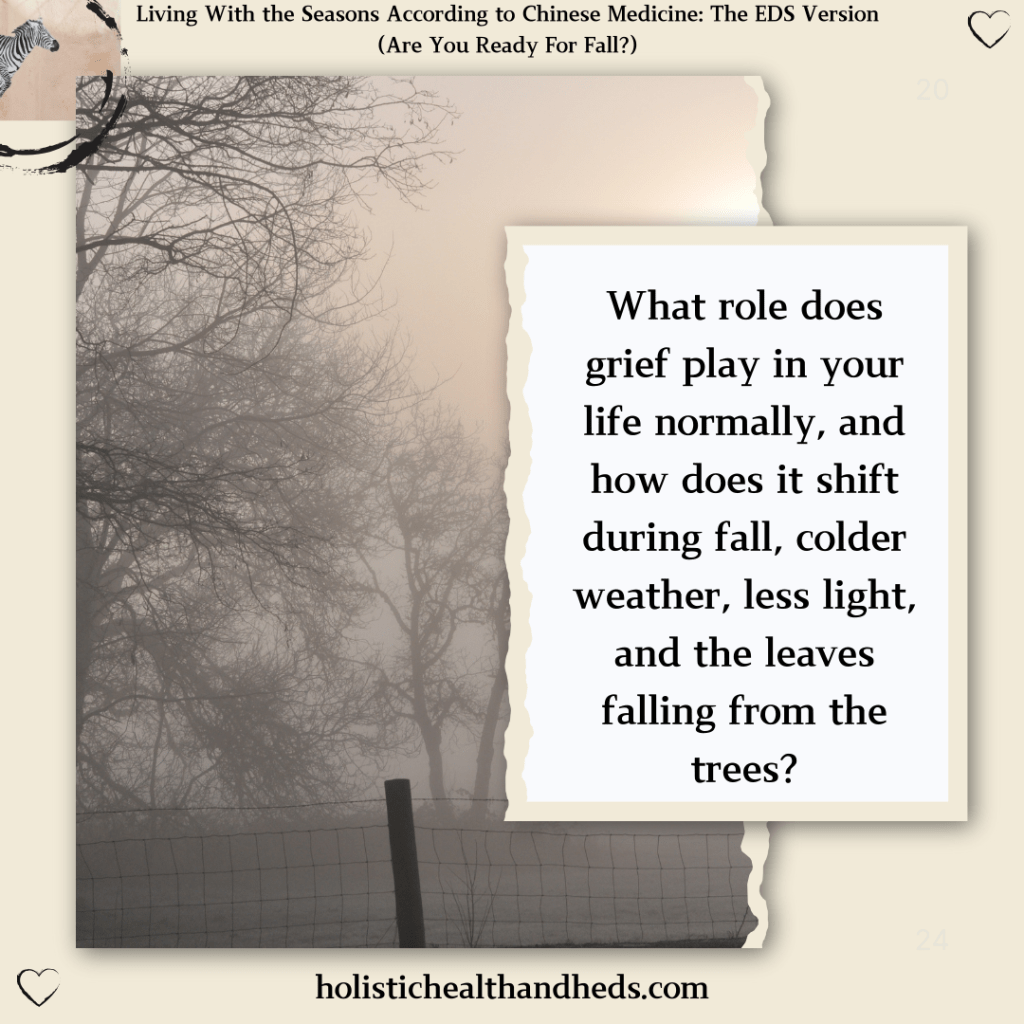
Speaking for myself as a former Spanish professor and a multi-lingual, multi-cultural person, I will often suggest to patients that they find some way to engage with grief on a cultural level. Take a look, for instance, at the Loss Project’s essay, “Letting Go–What Autumn Asks of Our Hearts.” If a British perspective doesn’t appeal to you, then maybe take a look at “Sharing day and the meaning of autumn across cultures” with its story of a young Chinese American child. Where do your people come from, and what rituals do they have to celebrate the harvest season? What role does grief play in your life normally, and how does it shift during fall, colder weather, less light, and the leaves falling from the trees?
Autumn can be a propitious time to see our grief and to nurture our healing. The key word here? Nurture. Give yourself permission to nest. Foster your sense of self-care and protection. If you feel like it would help you, maybe start working with a therapist or try acupuncture. But don’t ignore your grief or minimize it if it seems to be affecting you even more during these months. It may be part of the seasonal transition and the healthy response is to acknowledge it and to treat yourself with loving care.
What do you think?
In conclusion:
Living with the seasons is a way of practicing the art of living. It may be somewhat more challenging when we must factor in chronic illness before we get to the good stuff…but in a way, we appreciate those fuzzy sweaters in a way that someone who doesn’t know icy hands and feet cannot. When we are able to enjoy new spices or hearty recipes, we may have a shade of gratitude that a normie might never experience. And when we live with chronic conditions, we learn to live with our emotions in a distinct way, and this includes grief.
Chinese medicine’s philosophies towards the changing seasons and human interactions with environment can help us all to enjoy life that much more. Try mindfully observing yourself and your reactions to fall, and see what happens when you intentionally care for yourself within that given context. And if you haven’t yet tried acupuncture or other modalities of Chinese medicine, now is a great time to consider it.
What do you think?
*****
*****

Dr. Paula Bruno, Ph.D., L.Ac., is a licensed acupuncturist and herbalist, an AOBTA-CP traditional Chinese bodywork therapist, an author, and a health coach. She maintains an active and growing practice at Two Hearts Wellness, her Austin, TX office. Dr. Bruno is also available for distance appointments for wellness consultation or coaching.
In her first career, she was a Spanish professor.
Dr. Bruno’s specialties as a Chinese medicine practitioner include: • Musculoskeletal health (acute or chronic pain relief; Ehlers Danlos syndrome & hypermobility support) • Digestive support, gut health, and weight loss • Aesthetic treatment, including scar revision • Men’s health • General preventative care and wellness support for all persons.
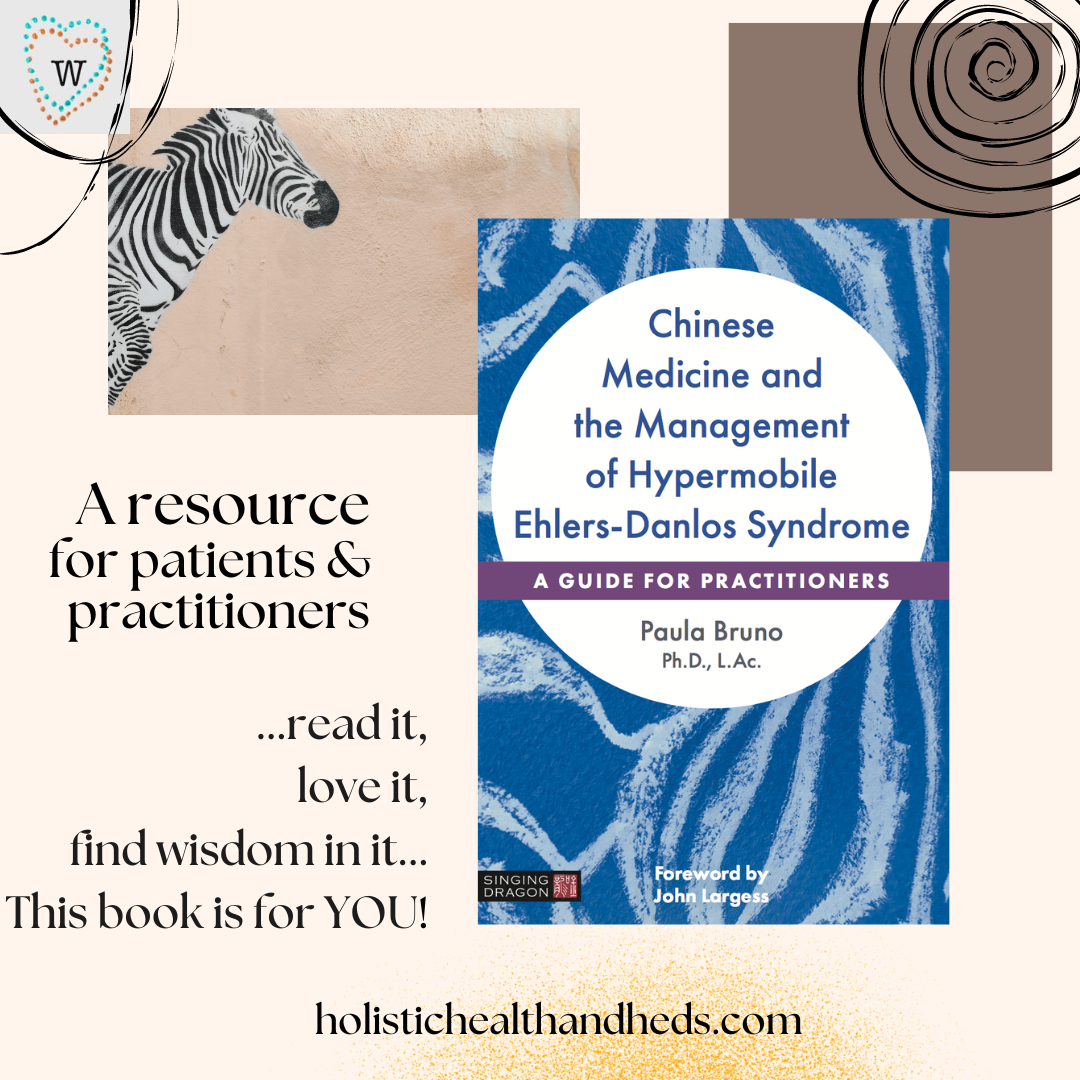
She is the author of Chinese Medicine and the Management of Hypermobile Ehlers Danlos Syndrome: A Practitioner’s Guide.
When you are ready to discover what traditional medicine plus a vibrant and engaged approach to holistic health can do for you, either contact Dr. Bruno or book an appointment online.
*****
Two Hearts Wellness/Holistic Health & hEDS does not accept paid advertising on this website
Note: Material on this web site site is not intended to diagnose, prevent, treat, or cure any disease, illness, or ailment. A Chinese medicine practitioner in Texas identifies syndrome patterns but does not diagnose illness. Material on this web site does not purport to identify syndrome patterns.
*****
*****
- EDS-specific essays on living with the seasons will be forthcoming on this website. Currently, you can look at “Living With The Seasons According To Chinese Medicine: Summer Tips For Health & Happiness For Zebras, Potsies, & Masties” for ways to be fabulous and creative during the summer. ↩︎
- I shared these articles in the Two Hearts Wellness companion piece but it’s worth repeating them here. For more on the weather and how it affects gut health, see “Blowing Hot and Cold: Body Temperature and the Microbiome,” “Cold exposure, gut microbiota, and hypertension: A mechanistic study,” and “Alterations in intestinal microbiota and enzyme activities under cold-humid stress: implications for diarrhea in cold-dampness trapped spleen syndrome.” ↩︎
 Holistic Health and hEDS